|
HEAT
SOURCE
A
marsupial joey is unable to regulate its own
body temperature, and thus relies upon an external
heat source. Until the joey is well furred and
old enough to leave the pouch, a pouch temperature
between 30-32° Celsius must be constantly
maintained. The most reliable and convenient
method for keeping a kangaroo or wallaby joey
warm is a small electric blanket, available
from Wombaroo Food Products, which is hung on
the inside of a box or carton with the joey's
pouch hung against it. The pouch temperature
can be controlled by adding (or removing) layers
of cloth placed between the pouch and the heat
source. Slow combustion stoves and hot water
bottles can also be used, provided you are prepared
to check that they are always maintained constantly
at 30-32° Celsius.
For
possums, use a 15 watt globe in a large tin
covered with, soft, woollen material as an external
heat source. Punch holes around the top of the
tin to stop the heat build-up from breaking
the globe. It is possible to "COOK"
the joey and kill it from overheating, so be
careful to keep the pouch temperature controlled.
A joey is unable to lower its own body temperature
by perspiring, although as the animal gets older,
it does learn to achieve some cooling from evaporation
by licking its fore paws. If the joey is licking
its fore paws in the pouch, then it is too hot.
Placing your hand into the pouch will give a
guide to the temperature. DO NOT fold electric
blankets around the joey as overheating can
result. EMERGENCY heating can be achieved by
placing the joey down the front of your jumper.
SUBSTITUTE
POUCHES
Pouches
are ideally made of soft, washable material,
such as old blankets, old sheets, jumpers and
windcheaters. The joey should be wrapped up
and placed in such a way that it remains in
a natural position. With unfurred marsupials,
it is wise to rub the skin with non scented,
non oil based skin lotion to
reduce fluid loss and to maintain humidity.
KANGAROOS:
The pouch should be just big enough for the
joey to move around in, but keep the joey snug.
It is advisable to keep the joey's pouch inside
a larger bag or sack, which can be suspended,
making sure the bottom of the bag is not touching
the ground. When the joey reaches the stage
where it is emerging from the pouch, the bag
should be kept closer to the ground so the joey
can leave or enter the pouch unaided.
POSSUMS:
A sock or a small woollen hat is suitable as
a substitute pouch. For small, pre-emerging
from the pouch stage possums, a safety pin securing
the top of the pouch prevents the possum from
getting out and becoming lost and cold. Older
possums eating solids should have their substitute
pouch in a cat or cocky cage, so that the possum
can move around and feed during the night. Place
a ring of wire around the top of the sock to
keep it permanently open, so the possum can
enter or leave the pouch unaided.
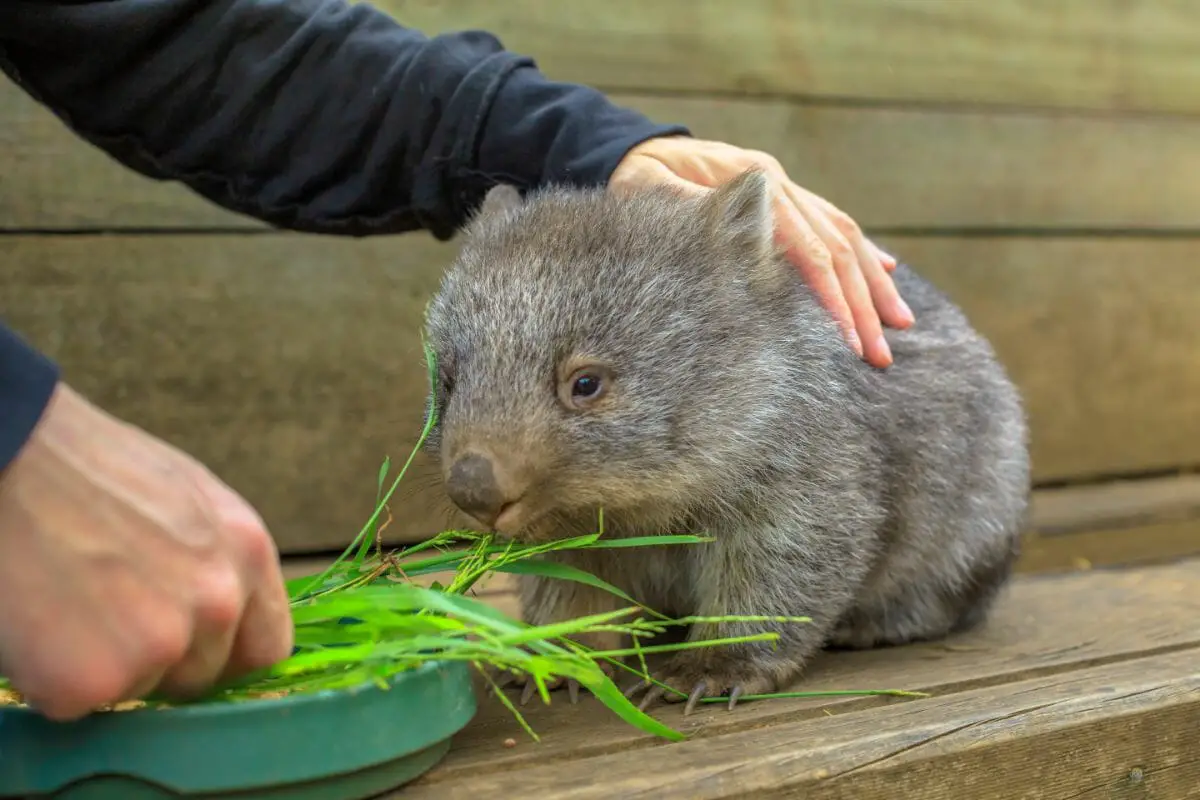
WOMBATS:
The pouch, with another blanket inside, can
be placed in a solid wooden box with a secure
lid, essential as the wombat gets older. An
electric blanket can be placed underneath half
of the box to maintain a constant temperature,
but enable the animal to cool off if necessary.
Wombats joeys are capable of controlling their
body temperature much better than kangaroo joeys.
STRESS
The
newly orphaned joey is likely to be suffering
from shock and stress as a result of the incidents
leading to its rescue. Injuries, such as fractures
or bites, will require veterinary attention.
Stress will be suffered as a result of separation
from the mother, due to loss of warmth and nourishment.
Make
your joey secure in a substitute pouch with
warmth if required. Leave the joey alone until
it has settled, and restrict initial handling
to one person. Handling, particularly by small
children can be stressful and can lead to death.
Any cuddling and handling should be done with
the joey in its pouch where it feels safe. The
joey needs the same kind of treatment as a premature
human baby, and should not be treated like a
cuddly toy. Your orphaned marsupial needs peace
and quiet, security and proper nourishment.
DIET
Marsupial
milk changes during lactation to provide the
nourishment required at the different stages
of joey development. Wombaroo Food Products
produce Milk Replacers which are designed for
individual marsupials, and are graded according
to age of the joey to mirror the changes which
occur in nature. There are four grades for kangaroos,
three for wombats, and two each for possums
and echidnas. Wombaroo Food Products also produce
growth charts which use tail, foot and weight
measurements to help you determine the age of
your joey so that you can relate it to the correct
age factor Milk Replacer. These growth charts
also give the recommended amounts of milk to
be fed, which should not be exceeded without
proper advice. Wombaroo Milk Replacer is produced
as a dry powder to which water is added. It
lasts in its powdered form for 24 months.
When
feeding, warm the required amount of milk, checking
the temperature on the inside of your wrist.
Feed the joey using a bottle and a teat. The
joey should be fed in its pouch, as this reduces
stress, however, remove the joey from the pouch
to toilet it. If the joey struggles and makes
it difficult to feed, hold the animal securely
into your body, cup your hand under its chin
and gently cover its eyes. This quietens the
joey and makes feeding easier.
TEATS
A
joey's mouth is easily damaged, and ulcers or
small irritations can occur if normal baby teats
or hard tubing are substituted for the correct
teat. Feeding bottles and a range of specially
made, soft rubber teats, designed for various
marsupials are available from Wombaroo suppliers.
As an emergency measure, however, a piece of
soft tubing or a plastic eye dropper can be
used.
EMERGENCY
DIETS
The
following formulae can be used until advice
and the correct Wombaroo Milk Replacer can be
obtained.
Kangaroos:
FULL CREAM evaporated milk or powdered milk
at half strength, warmed and given using a long
teat.
Possums:
FULL CREAM powdered milk, at half strength,
sweetened with honey, slightly warmed and given
using a small teat or dropper.
Wombats:
FULL CREAM powdered milk, at half strength,
with baby cereal (e.g. Farex) added to it. This
mixture is carefully spooned into the wombat
joey’s mouth.
INTRODUCING
SOLIDS
Intermediate
Kangaroos, those which are emerging from the
pouch, should be introduced to solid foods,
They should be supplied with fresh grass, including
the roots and attached soil, Lucerne hay, in
moderation, rolled oats, kangaroo pellets, carrots,
apples, bark and salt bush. The grasses should
be tied into a bundle and hung on the inside
of the pouch. Early in the season the grass
may not have dried out, so care should be taken
when feeding grasses as the high water content
can lead to diarrhoea. Do not exceed the recommended
quantity of Wombaroo Milk Replacer, or the joey
will not be hungry enough to eat solid foods.
When
initially introducing Wombats to solid foods,
they can be fed a couple of teaspoons of Heinz
High Protein baby cereal mixed into the Wombaroo
Milk Replacer. You will need to wrap the wombat
very tightly in a towel to restrict its movements
while you feed it with a teaspoon. Carrots,
apples, Lucerne hay, rolled oats and Lucerne
pellets are all food stuffs wombats can be weaned
onto, not forgetting their natural diet of grass
and roots.
Possums
enjoy fruits such as apples and pears, vegetables,
gum leaves and bottle brush. Roses are particular
favourites, however, BEWARE of PESTICIDES.
CLEANLINESS
Joeys
are normally stimulated to defaecate and urinate
by the mother's licking, so after each feed,
gently but firmly rub the genital area of the
joey with a tissue or toilet paper to stimulate
the joey. Continue stimulating until the joey
stops defecating and urinating. Failure to do
this may lead to urinary tract / kidney and
bowel disease.
f
there are episodes of diarrhoea, a nappy may
be needed, but utmost care and frequent changes
are required to prevent chaffing. A nappy can
be made out of a square piece of material. Place
the nappy on your knee/thigh with padding a
third of the way up. Place the joey facing downwards
straddling your leg, with the padding under
the anal area. Bring the corners in to meet
at just above the tail, and pin. Disposable
nappies are easier and can be used by cutting
an opening for the tail. If diarrhoea persists,
seek professional advice.
TROUBLESHOOTING
Dry
Skin
- Use baby oil, hand cream or lanolin. Dry skin
occurs because the substitute pouch is dry and
unlike the mother’s skin pouch.
Diarrhoea
- Once established on Wombaroo, diarrhoea should
not be a diet related problem, although if excess
quantities of milk are used a volume related
diarrhoea can occur. Avoid chills, fear (stress),
and handling by strangers. These can cause an
attack of diarrhoea, which, once started, is
often difficult to stop. KAOMAGNA, ADM and PECTIN
(Jamsetta) are worth trying along with reduced
volumes of milk per feed. These substances are
fed independently of the milk.
Sometimes
a newly acquired joey takes 24-48 hours to settle
in due to stress and adjusting to the milk formula.
Do not confuse this with diarrhoea. Do not panic
if the joey is loose when you toilet it, if
it is holding on between feeds it is still adjusting.
Sometimes
joeys develop diarrhoea due to a lack of digestive
organisms in the gut, and these need to be introduced.
This can be done using Commercially available,
coccidia-free, organism sources, such as Wombaroo
Gamma-G Colostrum Replacer. Click Here for further
information on this product.
Dehydration
-
This is the biggest danger of continued diarrhoea.
The simple test for this is pinch the skin anywhere
it is loose. If it drops back into position
quickly when released the animal is alright.
If it stays up the animal is dehydrated and
needs attention.
Sickness
- Wild animals do not show symptoms as plainly
as dogs or cats, and when they do it means they
are really sick, so contact your local vet quickly.
Symptoms may be a lack of appetite, drinking
less per feed, weakness, falling over, lethargy
- in short, anything which is different from
its normal behaviour.
Kangaroos
chew their cud, in the same manner as a cow
or sheep does, so what you may think is vomiting
or choking is in fact a perfectly normal "bringing
up of the cud".
Antibiotics
- Due to their reliance on intestinal micro-organisms
to digest their food, marsupials should NEVER
be given antibiotics by mouth, only by injection.
Immunisation
- All kangaroos and wallabies are susceptible
to tetanus and it is most important to have
your animal immunised. 5-in-1 vaccine can be
used, but preferably use Tetanus Toxoid
Castration
- A tame buck is as dangerous and unreliable
as a bull. No matter how gentle he has been,
one day he will treat you or your children as
a mate or rival, and either can be equally traumatic.
Do not use elastra rings for castration because
the hole is too large and will allow blood through.
The best time to have your kangaroo castrated
is before it is totally out of the pouch, which
depending on species, is normally between the
age of 8-12 months. Contact vet or your Wombaroo
agent for further advice.
Entire
male possums, especially brushtails, and entire
male wombats can be particularly belligerent
once sexually mature and should also be castrated
if being kept.
It
should be noted that once female wombats reach
sexual maturity they can also became quite antisocial.
Release
- Never release a hand reared animal into its
wild without first thinking through the problems.
Has
it learnt to recognise a food source in the
area?
Is
it a native to the area?
Can
it recognise predators?
Will
it suffer undue stress?
Will
it stress existing fauna?
Ringtail
possums will be content in captivity all their
lives but brushtails are perhaps best released
once adult. Wait for the warmer weather of the
late spring and leave food out for it until
it stops coming back for it.
Never
release a castrated animal or one that has permanent
disability.
Tame
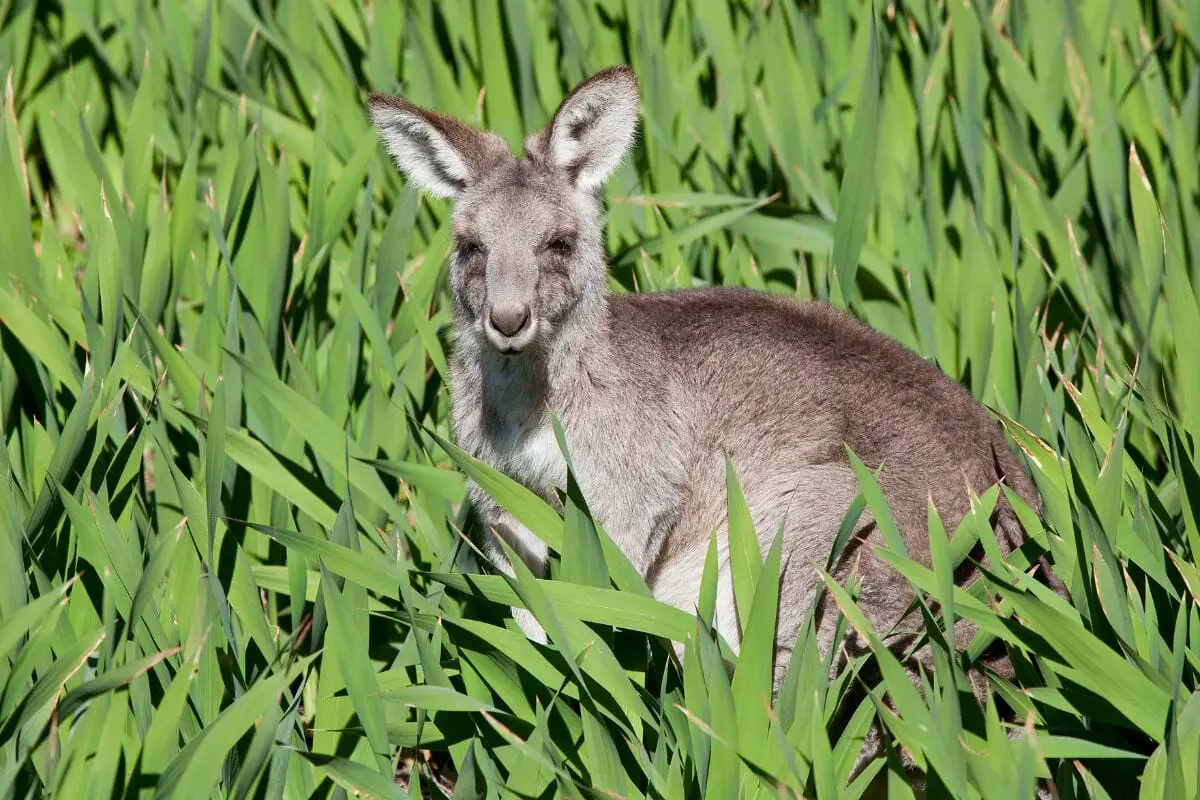
kangaroos can not be released to the wild with
any safety, and as they can live up to 20 years,
think hard before you decide to keep a kangaroo
or wallaby in captivity.
NOTE
that in South Australia it is illegal to release
any animal into the wild without prior written
permission from the Director of the National
Parks and Wildlife.
WEANING
Weaning
is a time when most mistakes re made. Kangaroos
and wombats are on milk for as long again once
they leave the pouch as they were in the pouch.
That is to say, for example, a Red Kangaroo
joey would normally stay in its mother’s
pouch for about 7 months; therefore it should
not be totally weaned off milk until it is at
least 14 months of age.
During
this time the pouch should be available for
the joey to return to in case it feels threatened
or cold. Ideally, the pouch should he hung in
a small draught free shed which opens into a
small yard. Solid food should be freely available.
A
heater light should be hung in the shed for
inclement weather and for macropods out of their
normal range, e.g. Reds in Adelaide. Wombats
also need a heater light if a suitable burrow
is unavailable. The longer wombats and kangaroos
are kept on milk, the friendlier they remain.
Possums
- Once possums leave the pouch, they like to
live in hollow logs which they often line with
gum branches and leaves. You should provide
your possum with a log in a large cage or small
aviary, which itself should be fairly protected
from inclement weather. In fact, possums destined
to be released should ideally be trained to
use a log while captive, then released with
the same log to maintain a certain continuity.
FURTHER
INFORMATION AND ADVICE
Regulations
in South Australia require you to obtain a Rescue
Permit from National Parks and Wildlife when
hand-raising marsupials, even if you intend
to release them. Permits can be obtained by
writing to your local National Parks and Wildlife
office.
Help is always available, please contact one of
the people mentioned in this Web Site contacts
listings. If you need professional advice,
information booklets and growth charts or
supplies of Wombaroo Milk Replacers, teats,
bottles, electric blankets, then please contact Healthy
Bird at
www.healthy-bird.com
|